A working portfolio of software.

Product thinking meets AI-assisted building.

Victor Colombo is President and Managing Partner of Fiat Growth, a fintech-native growth consultancy serving venture-backed fintechs. His career has been grounded in the customer: at American Express, he worked directly on new consumer card launches, helped build and ship new features and benefits, and partnered hand-in-hand with technology teams to build and scale entirely new forms of distribution. That same instinct drives the work below. Though not an engineer, he builds working software by deeply understanding a need or use case and thinking systematically about how to solve it, using AI tools to design, build, and ship real products. When he's not building, he's at home in Brooklyn with his wife and two kids, chasing good bottles of Nebbiolo and overthinking his fantasy basketball draft.

Victor Colombo
Professional products

Tools I built for work

Two platforms built for Fiat Growth: one that accelerates the client work, and one that runs the business behind it.

Fiat Studio

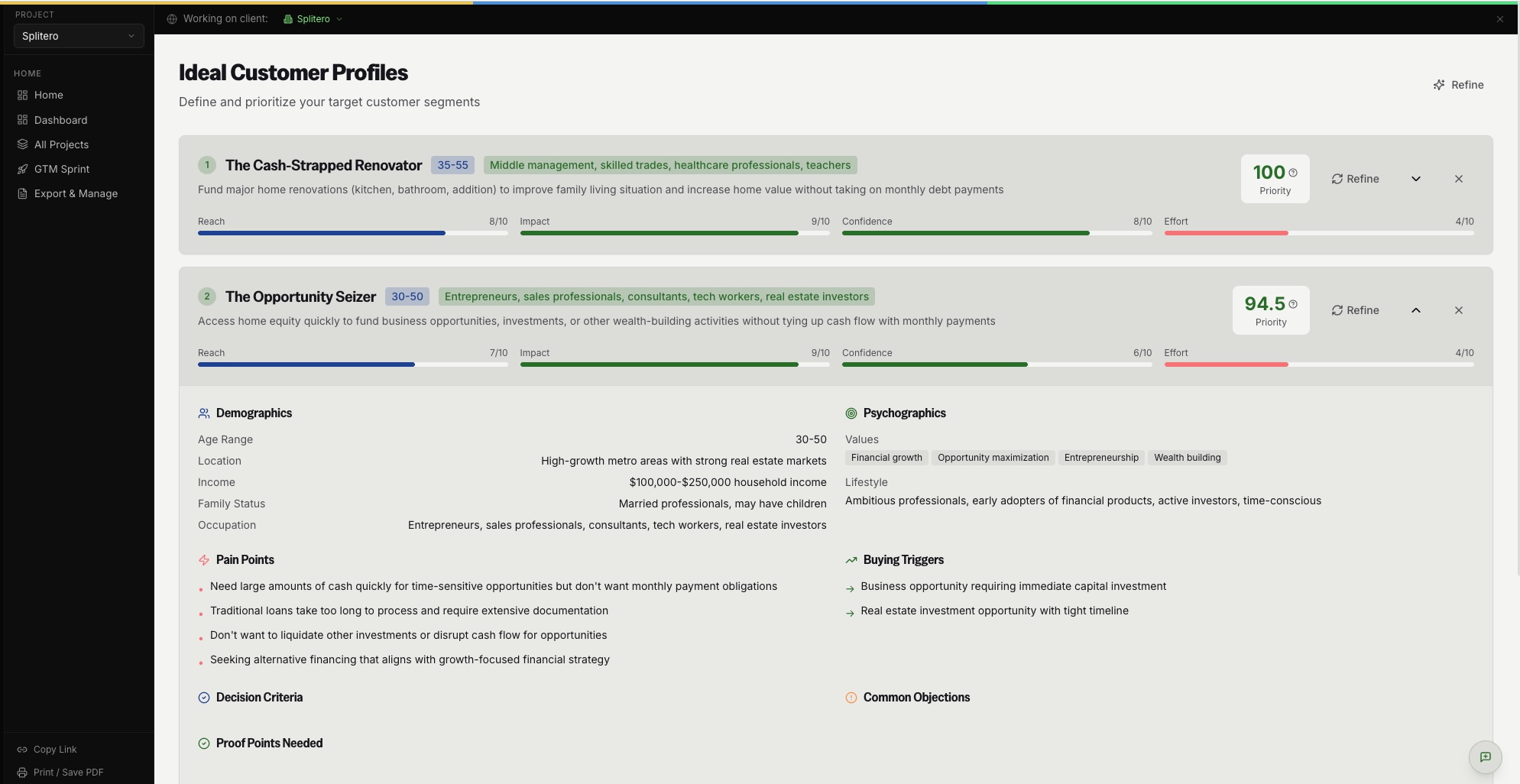
A strategist-led platform that uses AI to accelerate our go-to-market work — grounded in 8 years and 200+ fintech engagements of proprietary data.

In Use
The problem

The early- to growth-stage, venture-backed fintechs we work with need to move fast. Over eight years and 200+ clients we've built deep experience and a large body of proprietary data — Fiat Studio lets us draw on that programmatically so our strategists deliver better outcomes, faster.

What I built

A first working iteration — a proof of concept that has anchored how we're evolving the business. The idea: keep our strategists in the driver's seat and use AI to accelerate the work they lead, not to do it for them. A strategist moves a client project through a guided flow (competitive intel → ICPs → messaging → creative → lifecycle → execution plan), with AI agents doing the heavy lifting fast at each step, grounded in our proprietary fintech benchmarks and accumulated client insights so the work reflects Fiat's methodology rather than generic AI. I built the initial version to prove the model; it's now in active development and expansion as I partner with others across the team to build it out.

Key functionality
  • Strategist-led, AI-accelerated flow — the strategist directs the work while each module feeds the next (ICPs → messaging → creative), keeping the GTM plan coherent as AI compresses each step.
  • Grounded in proprietary data — outputs draw on Fiat's fintech benchmarks (CAC, LTV, funnel conversion) and 8 years of client insights, not the model's imagination.
  • Ad Intelligence — agents pull and analyze competitor ads from the Meta Ad Library, running a creative pass far faster than manual review.
  • Partnerships module — mines our own network and contacts to surface warm, relevant partnership paths instead of starting cold.
  • Knowledge wiki from Granola notes — parses meeting notes into a structured store spanning client, cross-client, and vertical-level insights.
Tools / stack
Next.js 14ReactTypeScriptSupabase / PostgresAnthropic ClaudePineconeTailwindVercel

Fiat Ops Dashboard

The single command center that runs the business side of a marketing agency — revenue, capacity, pipeline, contracts, and client health in one live view.

In Use
The problem

Leadership was running the business across scattered spreadsheets, Salesforce, and PDF contracts, with no single view of revenue, team capacity, or the health of the client portfolio.

What I built

An internal web app that unifies Google Sheets, Salesforce, and signed contracts into one real-time operating picture. It shows revenue by client and service line, who's over- or under-booked, the sales pipeline, margins, commissions, renewals, and client health — all role-gated. Behind it sits a Postgres backend with ~24 functions handling ingestion, forecasting, and commission math.

Key functionality
  • AI contract ingestion — on Closed Won, AI reads the signed PDF and extracts client, dates, value, services, and billing terms into a review queue — no manual entry.
  • AI Proposal Builder — a custom Granola prompt captures full discovery context, so proposals are tailored at scale instead of templated.
  • Client portfolio management — tracks client health and flags contract/renewal status so at-risk accounts get attention before they slip.
  • Live profitability scoping — as you staff a client, see billing vs. cost-to-deliver vs. gross margin in real time, plus each person's capacity across clients.
  • Forecasted revenue — blends signed revenue with the Salesforce pipeline, weighted by how likely each deal is to close.
Tools / stack
ReactViteSupabase (Postgres + Edge Functions)Anthropic ClaudeGoogle Sheets / DocsSalesforceQuickBooksVercel
See how it works [add walkthrough URL]
Hobby products

Apps I built for my life

Real, deployed apps I use at home.

Meal Planning App

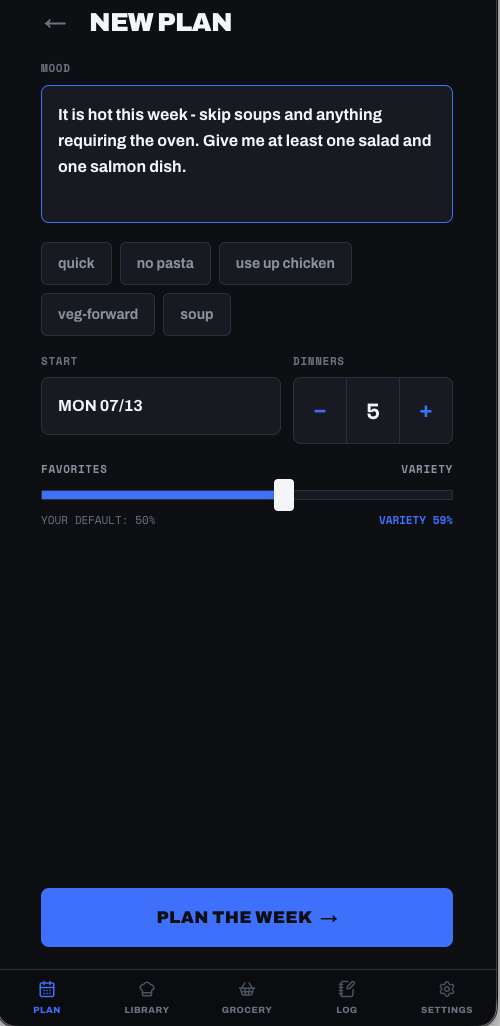
Swipe your way to a week of dinners in seconds.

Live
The problem

"What's for dinner?" is a nightly tax on mental energy, and coordinating meals across a household adds friction right when everyone's busiest.

What I built

You start with a quick prompt describing your household's tastes and constraints, which tunes every recommendation from the first deal. Then you build the week as a stack of swipeable recipe cards — keep the dinners you want and swap out the rest while it re-deals around your picks (no back-to-back starches, recency lockout, moods like "quick" or "no oven"). One tap pushes the finished plan to your calendar and turns it into a grocery list. And it gets smarter over time: mark whether you'd make a dish again, or tell it why you passed, and future weeks sharpen to your taste.

Tools / stack
Next.js 16React 19SupabaseClaudeFramer Motion
In development

Active development

Projects I'm actively building out and pushing toward broader use.

Wine Tracking App

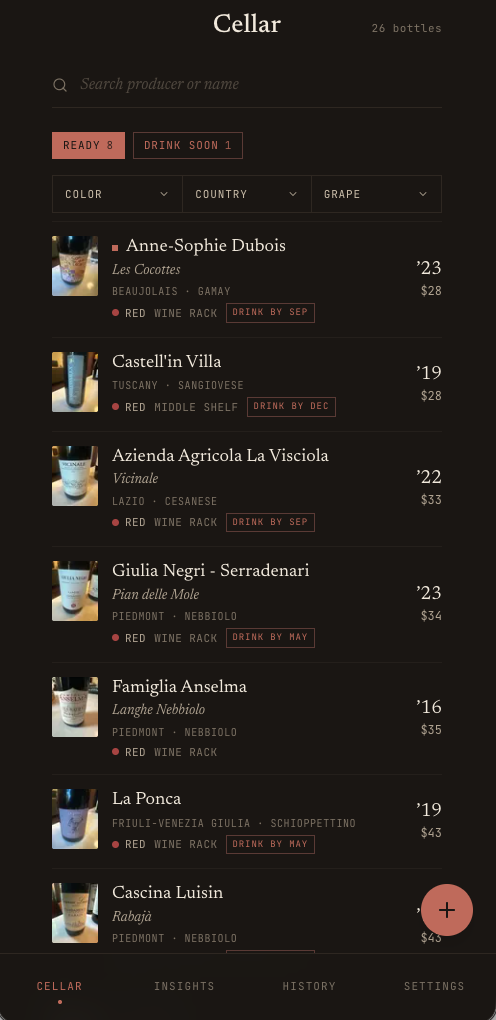
Snap a label, catalog the bottle, know when to drink it.

Live
The problem

A wine collection's tasting notes, ratings, and drinking windows usually live in scattered notes or a spreadsheet — so you never quite know what's ready to open.

What I built

A single-user PWA where you photograph a label and Claude vision auto-extracts producer, vintage, and varietal. It tracks drinking windows, ratings, buy-again flags, storage locations, and an opened-bottle history. A taste-insights view surfaces the patterns across a collection — how many wines tasted, how many producers, how many countries, with breakdowns by varietal, region, and rating. So far it has catalogued over 600 wines.

Tools / stack
Next.js 16React 19SupabaseClaude VisionVercel

Kids Stickers App

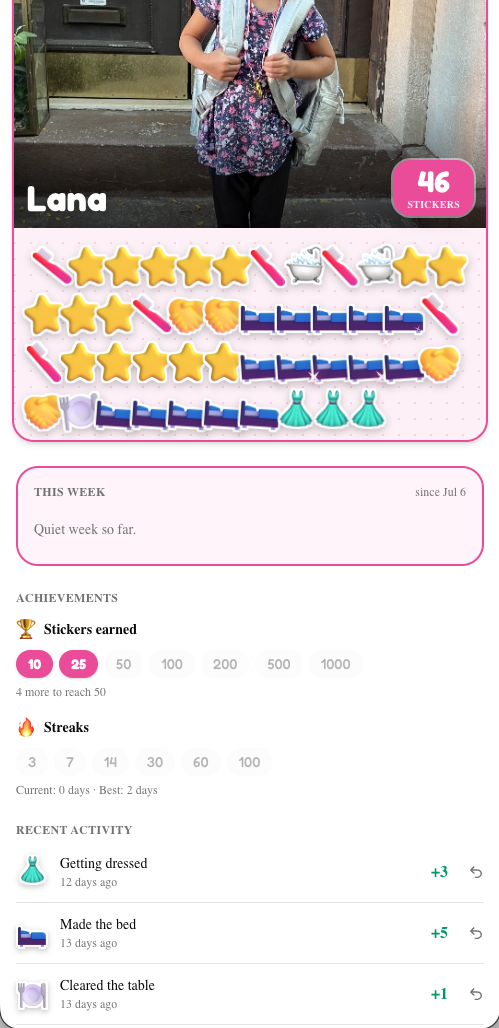
Track and celebrate kids' good behavior — no spreadsheet required.

Live
The problem

Rewarding kids for chores and good behavior needs to feel celebratory, not clerical.

What I built

A mobile-first PWA parents run on their phone with their kids. Awarding a sticker fires confetti and haptics; stickers pile into playful collages, and milestones, streaks, and redeemable rewards keep it fun. Built direct-to-production and in active family use.

Tools / stack
Next.js 16React 19Tailwind v4Framer MotionSupabaseVercel

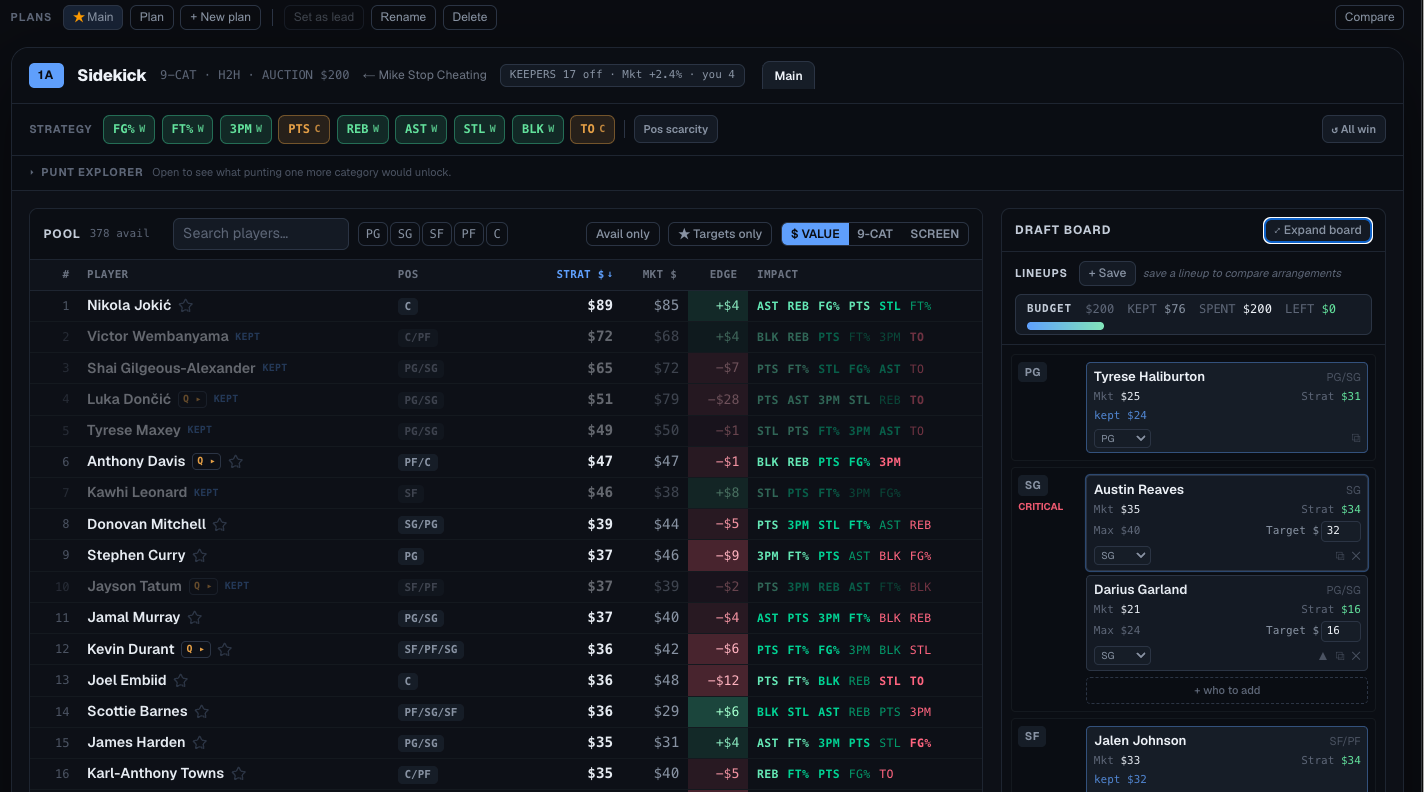
Fantasy Basketball Draft-Day Sidekick

Plan the perfect draft, then run it live.

In Use
The problem

Auction drafts demand dozens of judgment calls under time pressure, yet most tools offer vague advice instead of real numbers — and none help you walk in with a coherent plan in the first place.

What I built

Two tools in one: a pre-draft planner and a live draft-day cockpit. A custom projection pipeline, backtested across past seasons, builds an optimal target roster with clear fallback options at every position. A Monte Carlo simulation then pressure-tests that roster across thousands of draft scenarios to expose where it's fragile and surface concrete ways to improve it. On the day, it runs live, updating predicted room prices, category-strategy value (win / compete / punt), and position scarcity as picks come off the board.

Tools / stack
Next.js 16React 19ZustandSupabasePython / PandasVercel

Brooklyn Real Estate Assessment Tool

Broker-grade comps, built for buyers and sellers — not brokers.

In Use
The problem

Finding the right clearing price depends on high-quality comparable-sales data, usually accessed through a broker. The few tools that exist are built for brokers, so homeowners and buyers have no reliable way to get trustworthy comps directly.

What I built

A tool focused on one narrow slice of Brooklyn — going deep rather than wide to produce genuinely precise comp insights. A five-stage pipeline ingests a StreetEasy listing via bookmarklet and reads floor plans and photos with vision models, then layers in the factors that actually move value here: school zones, distance to the subway, layout flexibility, and a real read on the specific street, block, and where the home sits in the neighborhood. NYC PLUTO records enrich every assessment, with a local inspector UI for review.

Tools / stack
Python 3.11SupabaseClaude VisionReact / ViteNYC PLUTO API
Private tool